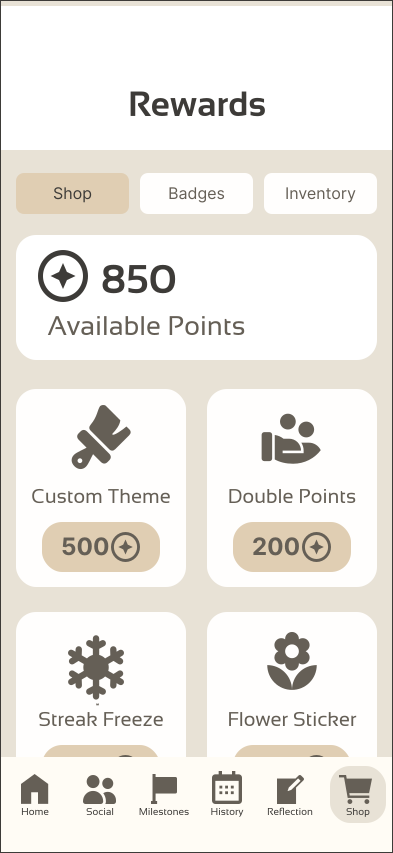
Start with the right questions.
Two questions shaped the work: how students distinguish a habit from a goal, and what kind of progress view feels genuinely motivating.
A CASE STUDY ON HABITS / 01
How might habit tracking support students when life gets busy, plans change, and motivation fades?
01 / THE CHALLENGE
HabitU explores how post-secondary students aged 20–29 form and track habits in daily life. The project moved from competitive research and interviews to prototypes, remote usability testing, and a final interface direction.
Two questions shaped the work: how students distinguish a habit from a goal, and what kind of progress view feels genuinely motivating.
A screening survey examined goals spanning health, academics, personal development, stress, and time management. We compared Bullet Journaling, Habitica, Finch, and Aspect to understand different models of motivation and effort.
Student interviews then revealed five recurring themes: barriers, emotions, hybrid systems, reminders, and prioritization.
Tracking tools lost appeal when they felt tedious or obligatory. Academic demands and changing schedules made consistency harder.
Participants valued immediate feedback, reminders, flexible methods, and fewer disconnected tools. The design direction needed to encourage progress without turning a missed day into failure.
Screening survey, what students track: health and fitness goals 28.6%, academic improvement 19%, personal development 14.3%, reducing anxiety or stress 14.3%, time management 9.5%, and 14.3% do not track habits.
Hand sketches became a low fidelity digital prototype. A user flow mapped the main pages and the secondary steps needed to complete key tasks.
We explored three style tiles with different moods, palettes, and typography before choosing a visual direction for the final interface.
Five participants joined moderated remote sessions of about 30 minutes each. Tasks, open exploration, think aloud feedback, and interviews helped assess navigation, gamification, core tasks, and motivation.
The flow was revised where testing exposed confusion. The visual themes were not individually A/B tested within the project timeline.
THE MAKING / ARTIFACTS
Select any piece to see it up close.
07 / FINAL DIRECTION
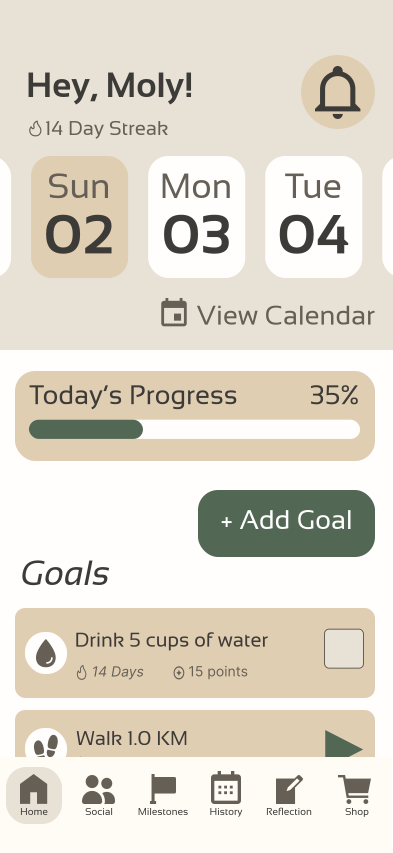
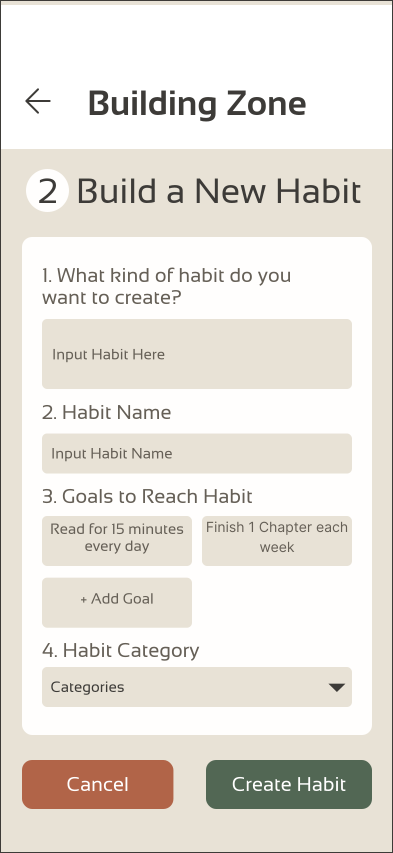
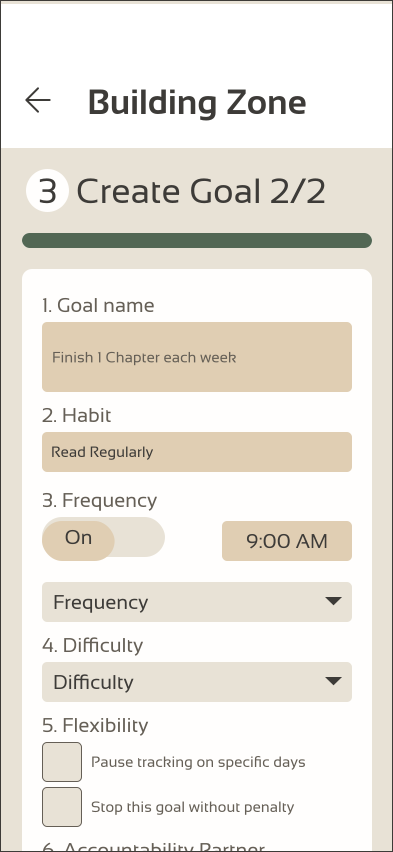
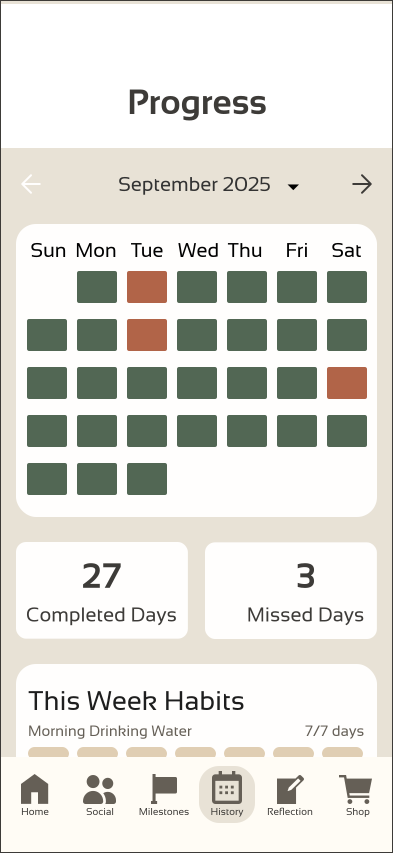
The final mockup brings progress, goals, and planning into one interface. It is the outcome of the project’s research and testing process, with room for further validation.
View the prototype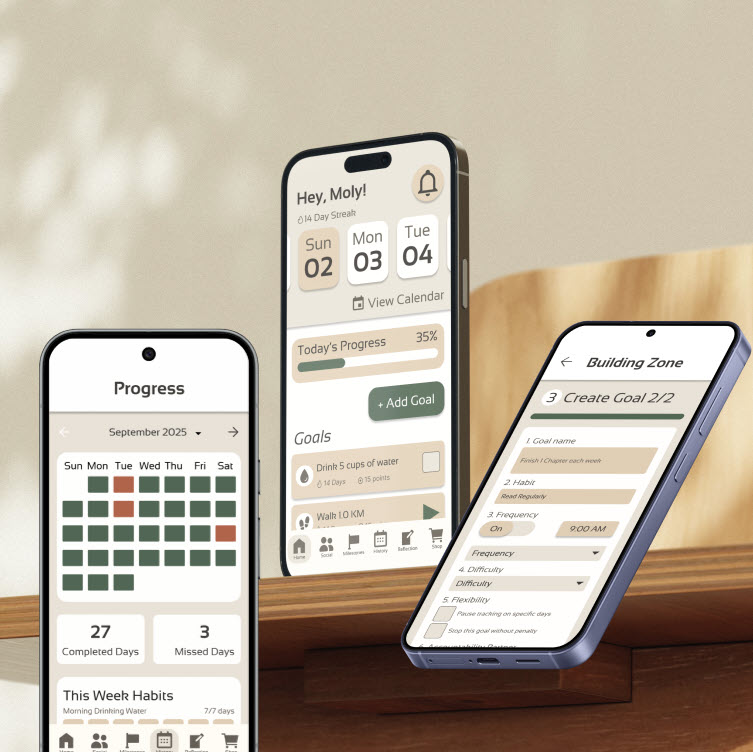
08 / THE TAKEAWAY
The project suggests that flexible, supportive tracking can better fit the reality of student life. Its qualitative themes show a direction for design rather than a measured outcome.
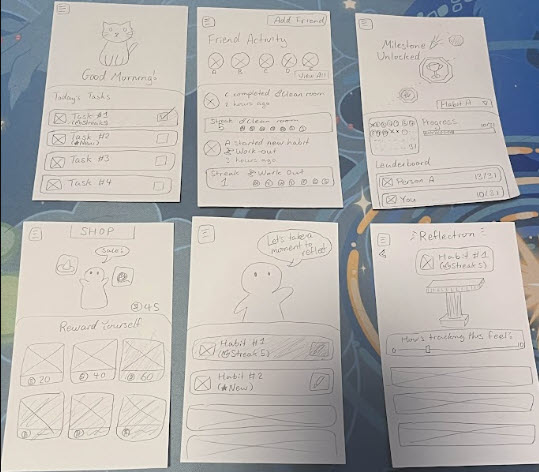 SKETCHING
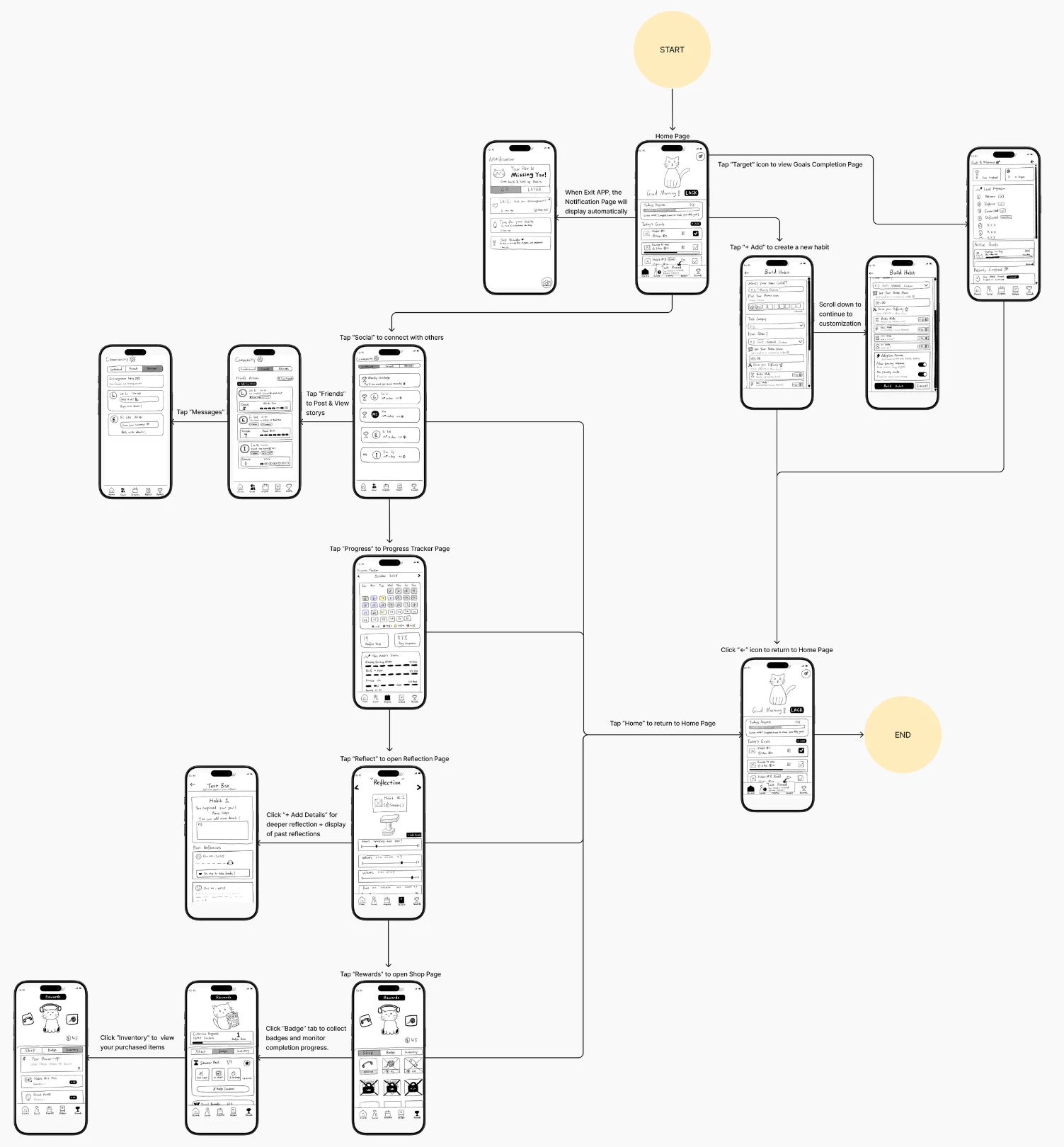 USER FLOW
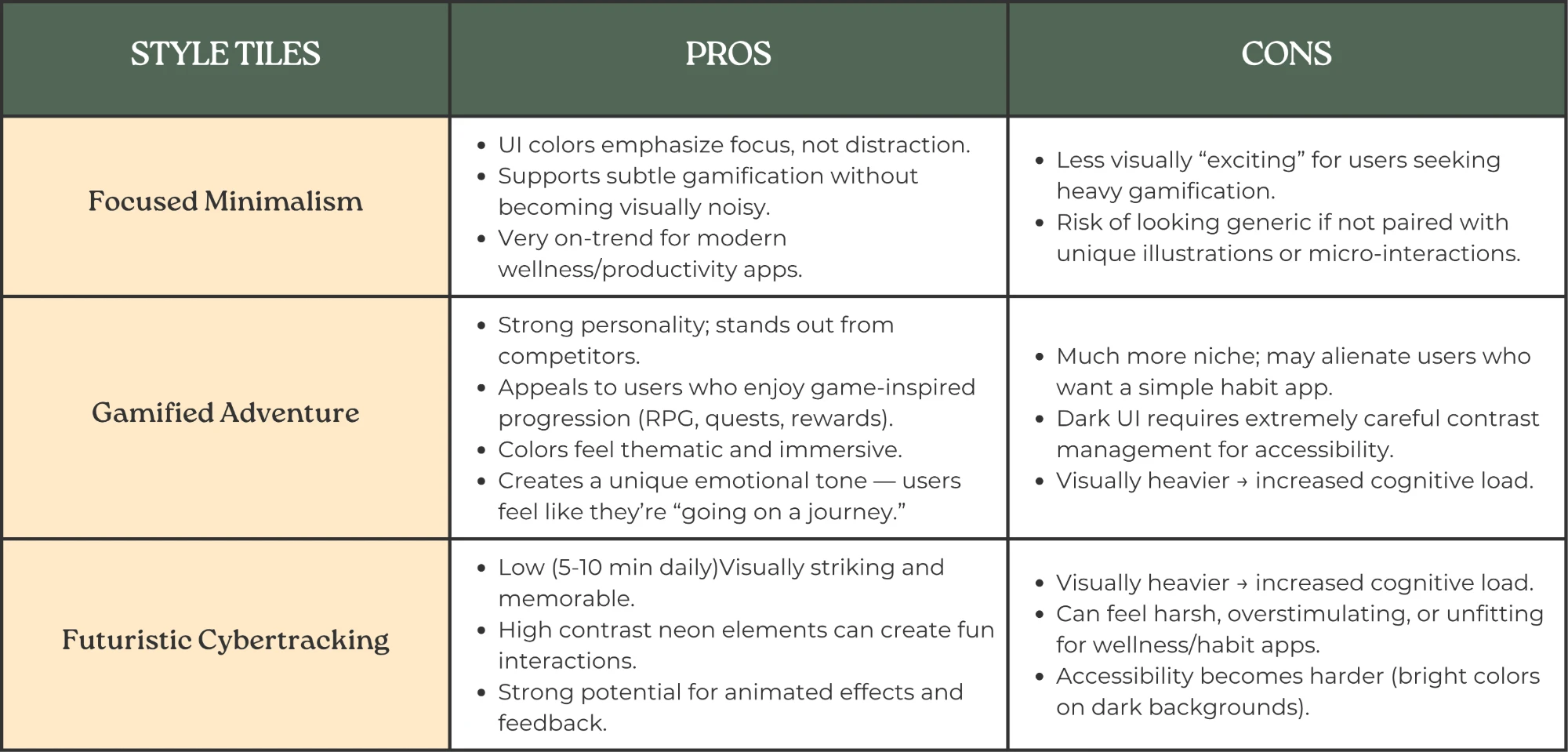 STYLE COMPARISON